


This article about Live Stream Shopping was co-authored with students from the Digital Major of HEC Paris Masters in Management, promo 2022. During the course, students have to learn how to optimize and create content to be published. For this, they dive into the trends impacting retail and e-commerce, and only a select few are published in the blog.
We want to give our special thanks to Ambre Kadmiri, Leila Benjelloun & Teseo Dori, the two students who co-authored this post.
Live Shopping, or Live Stream Shopping, sounds like a new term. It’s a mix of a concept we’ve known for years – teleshopping – and one that’s newer – influencer marketing on social media. But, what is Live Shopping exactly? What does it look like, and does it work?
What is the Live Shopping Experience?
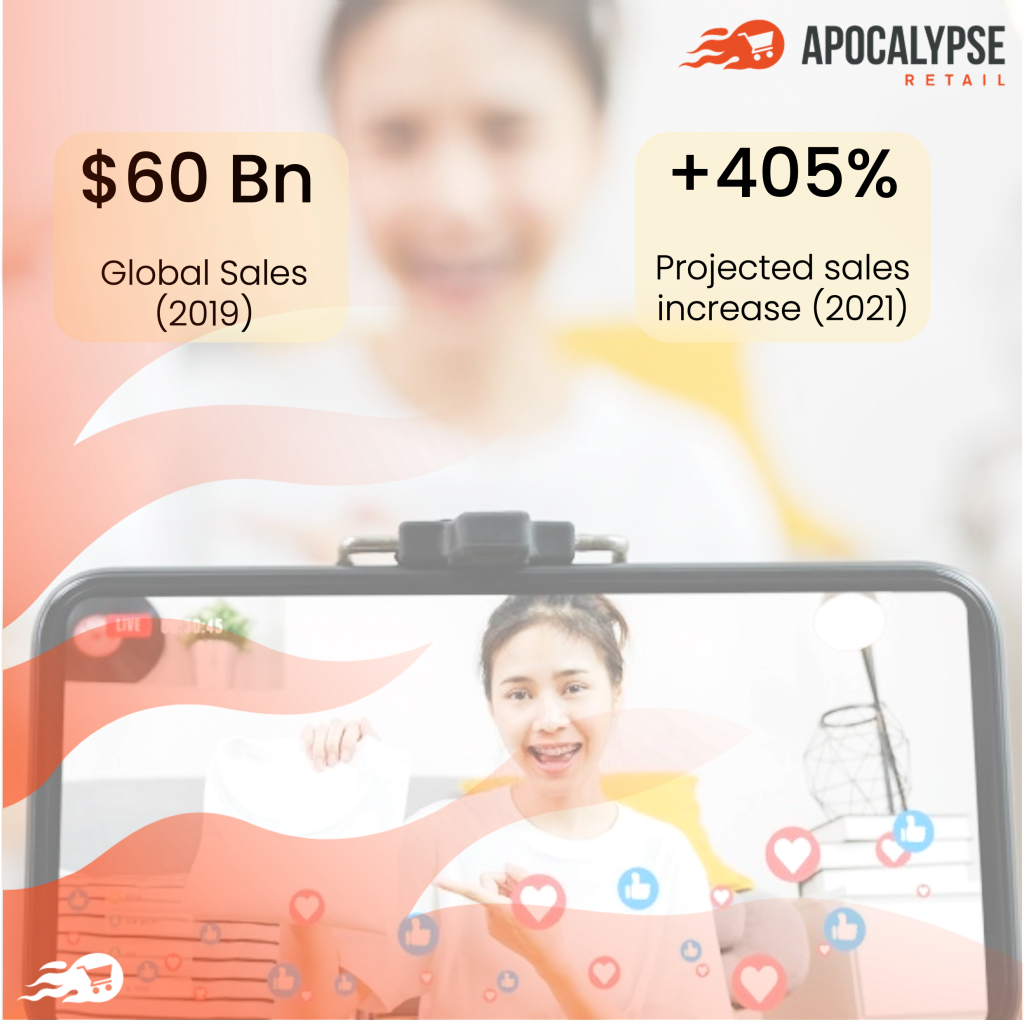
Live Shopping is disrupting the E-commerce industry as we know it. An interactive shopping experience where you can buy the promoted items on the spot.
As Coresight puts it, “It’s digitizing QVC and HSN,” and using technology to make sales. Very successful in China, Live Stream Shopping was a $60 billion market in 2019.
This phenomenon is proving to be a big revenue source for brands globally.
We can expect it to become far more popular in the United States as the idea catches on.
Have you ever seen an influencer do a live try-on, or a brand does a live fashion show on Instagram Live? Welcome to Live Shopping!
How to Boost Sales with Live Shopping?

We know that Live Shopping is gaining traction fast and wide, but how does it generate revenue?
Prompted by the COVID-19 crisis, Live Shopping takes advantage of the at-home shopper.
With the pandemic, E-commerce sites have invested in their online shopping experiences. As a result, it’s far cheaper to sell online without having to pay storefront leases.
Live Shopping hosts can expect a dramatic increase in sales and brand awareness.
What do Live Shopping Platforms Look Like?

You can imagine the preparation necessary to make a Live recording without any flaws.
Live Shopping is live, unlike Instagram Stories or television shows.
There’s a lot more preparation behind the scenes than you may expect between the brand and the host.
The host is usually someone famous, like the Kardashian’s. It happens on platforms such as YouTube, Instagram, and Snapchat.
An example would be Kim Kardashian showing herself using a teeth-whitening product on Instagram Live.
Live Shopping is Page Out of China’s E-commerce Playbook.

Many of the big live streaming platforms available in China are unavailable in the US.
Some examples are Taobao, JD.com, and Pinduoduo, an agricultural-based E-commerce site. These companies also provide buyers with same-day delivery and shipping – as good as Amazon.
JD.com and TaoBao have Live Shopping streaming integrations built into their websites. Unfortunately, the live shows don’t show salespeople selling a product that isn’t their own. Still, they are home to independent authors, creators, and emerging artists selling for themselves.
These selling avenues are possible and welcomed on sites like TaoBao in China. This broadens the market and the selling opportunities for all types of businesses.
What makes Live Shopping more profitable is payment platforms such as WeChat Pay. These platforms make live selling even more successful because of how accessible they are to mobile users.
Live Streaming has proven to foster a comparable sense of customer loyalty and engagement to in-person shopping. But, as we know, technology, social media, and anything digital is addictive.
Live Streaming platforms have created communities where hosts share their favorite products. Kim Kardashian shared her teeth-whitening kit with her Instagram audience, for example. The connection they make with their fans increases the chances of sales.
The power of Live Streaming comes from the endorsement of someone they admire. China has jumped on this trend and generates most of this industry’s $60 billion revenue.
How is Live Stream Shopping Beating Traditional Retail?

So clearly, Live Shopping excels in the Chinese Market. But, how does it compare in the US or European markets? How does it impact the Retail industry in other countries?
Live Shopping surprisingly benefits Retail stores that are unsuccessful in physical stores.
Live Shopping is a way to promote fashion brands to create a unique social environment. It’s proving to support Retail brands with many smaller boutiques.
In contrast to in-store retail, the shopper doesn’t have to leave their home, dress up, or interact with a sales associate, unless they’d like to. With Live Shopping, you can join from anywhere and stay for however long you’d like, whenever you’d like.
It benefits the brand or store as well. With E-commerce booming, Retail stores can sell their items online, where most buyers are shopping already. So not only are they meeting their buyers where they already are, but they’re making it easier for themselves as well.
E-commerce stores save on rent, pay staff, and only have to work when they’re making sales. In addition, this type of selling allows merchants to boost brand awareness globally instead of just where the store is.
This awareness can be a crucial distinction between a highly profitable business and a struggling one.
In an increasingly digital world, more and more transactions happen online. However, things aren’t set to change anytime soon, so not only is e-commerce booming, but it is set to expand with services like Live Streaming.
Live Streaming bridges the gap between 1-1, in-person shopping, and quick and easy online sales. It provides a vetted, honest opinion of a product and the ease of an online transaction, all in one. In the world we live in, this type of shopping is here to stay.
What Are the Benefits of Using Live Stream Shopping?

Is the future of sales going to be video? Rebecca Minkoff is convinced, but she is interested in making it an interactive customer experience like many other brand owners and designers.
The benefit of video sales seems to be in the ability of the product in real life and a multidimensional view. On websites, you’ll see on many product pages how there’s often someone modeling the effect through a short video clip, along with photos.
Video promotions are extremely popular and generate higher sales due to the product’s transparency and the shopper’s ability to make a more informed decision on whether or not they like the item.
On Live Stream shopping platforms, this is compounded with the ability of the host to speak about the product and answer questions live verbally. 96% of people who have made online purchases admit that they watch an “explainer” video before purchasing.
This statistic indicates that videos transform the buyer’s journey, and 85% of product marketers have capitalized on using video as a marketing tool and have seen a positive increase in sales revenue.
To build on this, the live video aspect of Live Stream Shopping appears to create a more robust personal engagement than regular e-commerce shopping or even in-person shopping.
Ads on Instagram, Twitter, or YouTube have lost integrity over the years, with influencer’s taking on promotional language and photos that diminish any personal touch. With Live Shopping, hosts can answer shopper’s questions, show the product, and give real-time promotions, adding exclusivity and creating a shopping network.
This type of online purchasing translates a true sense of authenticity, often masked behind edited and photoshopped promotional advertisements that have become too popular elsewhere.
What Are the Drawbacks of the Live Shopping Experience?

Some have pointed out that Live Stream Shopping has a more personal, natural touch than regular e-commerce. Still, it doesn’t have a unique, 1-1 shopping experience.
While the viewer can see the host or merchant, they can’t see the viewers and engage with them the same way they may be at a store.
Unfortunately, some level of interactivity that the in-store shopping experience offers is lost in live shopping. For example, a sales associate telling a buyer that a dress looks fantastic on them isn’t possible like it is in traditional stores.
What are the Most Popular Live Shopping Platforms?

PinDuoDuo, Douyin, Amazon, Instagram, and TaoBao are top contenders in the Live Shopping Market scene.
But there are also smaller sites, apps, and social networks investing in this new shopping trend. While Amazon is certainly investing in the space with AmazonLive, they are not the first to do it.
Smaller E-commerce unicorns include TalkShopLive, BrandLive, CommentSold, and Ntwrk – whose revenue doubled in April and March 2020.
Amazon has a daily live streaming channel, hosting daily live streams selling cooking, health, and fitness products. Facebook is doing a similar platform service.
And if you’re a dedicated QVC fan, don’t worry. The network sees this opportunity as a natural progression of the business. They, too, have begun Live Streaming sessions on Facebook and YouTube and will soon roll out its platform.
Instagram Live Shopping is also kicking off American-based brands. Like Instagram Live, this new integration adds an immediate shopping element where viewers can immediately purchase the products.
These live sessions are mostly product demos that educate and engage buyers to build brand awareness and intrigue. They often collaborate with another influencer, brand marketer, or host to offer even more authenticity.
These experiences ultimately take e-commerce to the next level. They create a human interaction that isn’t possible on a static shopping website.
What is the future of Live Shopping?

We can expect Live Stream Shopping to be the latest, most successful version of e-commerce.
With in-store retail becoming less attractive to buyers and sellers and e-commerce lacking a sense of community, Live Stream Shopping capitalizes on the at-home buyer’s tendency to live online.
We can expect similar growth in the digital shopping space that China has seen in the past few years. Large companies like Amazon and Instagram catch on and look for ways to diversify and innovate social media marketing.
Do you want more insights into E-commerce, Omnichannel Retail, and Digital Transformation? Subscribe to ApocalypseRetail to get insights sent directly to your inbox. Our content is designed for top business schools, retail managers, and eCommerce entrepreneurs who want to survive in the ever-volatile retail industry. Subscribe to our newsletter to join the fight against the Retail Apocalypse!


0 Comments